Whale Circus
 |  |  |
|---|---|---|
 |  |  |
 |  |  |
 |  |  |
 |  |  |
 |  |  |
 |  |  |
 |  |  |
 |  |  |
 |  |  |
 |  |  |
 |  |  |
 |  |  |
 |  |  |
Whale Circus
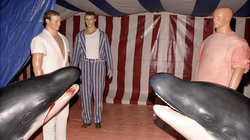
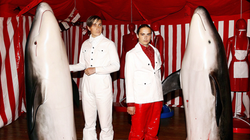
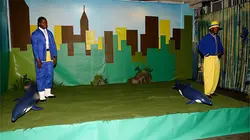
AI-generated images not only reveal how machines perceive the world, but also reflect how humans have learned to see it. Whale Circus (2024) constructs a fictional circus populated by whales and human models, where references to different nations, geopolitical cultures, social roles, and historical visual symbols are dismantled and recombined. Through these improbable juxtapositions, the work examines the mechanisms of image production in the age of algorithms and the power structures embedded within them.
Rather than creating images from nothing, artificial intelligence generates visual content by recombining existing images, symbols, narratives, and cultural associations. The datasets that enable this process are far from neutral. They are shaped by accumulated visual archives in which colonial histories, geopolitical narratives, mass media representations, and enduring cultural hierarchies remain deeply embedded.
Rather than focusing solely on algorithmic bias, Whale Circus investigates the visual classification systems that produce and sustain such biases. The scenes appear plausible at first glance, yet gradually slip into the absurd: whales emerge in landlocked countries, while people, architectures, and landscapes are displaced from their expected contexts. Faced with these hyperreal yet dislocated images, viewers often find themselves instinctively attempting to identify nations, cultures, and identities from limited visual cues.
In doing so, the work raises a broader question: as technology increasingly reorganizes, reproduces, and amplifies existing structures of knowledge, where do the images, labels, and categories through which we understand the world actually come from? Do they reflect reality itself, or the historical imaginaries and power relations embedded within visual culture?